Naughty, Nice, I Tried SVG Cut File Review for Real Projects
As an embroidery designer who's stitched everything from custom sweatshirts to personalized baby clothes, I’ve come across a lot of digital designs. Some are just okay—functional but forgettable. Others stand out with their personality and versatility. The Naughty, Nice, I Tried SVG Cut File falls into the latter category. It’s not just another holiday design; it’s a conversation starter. Let me break down what makes this file worth considering for your next project—and where you might want to tread carefully.
First Impressions: A Playful Yet Polished Embroidery Design
The moment I opened the SVG cut file, I could tell this was going to be something special. The layout is clean, with bold lettering that carries a whimsical yet confident vibe. The theme blends humor and charm, perfect for a wide range of projects, especially those aimed at Christmas or personalized gifts. What caught my eye most was how well-balanced the elements are. There’s enough detail to feel expressive without being overwhelming—a crucial factor when translating digital art into real-world stitching.
I see this as a strong contender for custom apparel, particularly t-shirts and sweatshirts. But I also tested it on a few other surfaces—like a tote bag and a pillow cover—to get a better sense of its adaptability. The visual appeal remains consistent, which means it can work in different formats and fabric types if used thoughtfully.
Real-Life Application: From T-Shirts to Holiday Gifts
One of the first things I did was consider how the Naughty, Nice, I Tried SVG Cut File would look on a sweatshirt embroidery project. I tried it on a medium-weight cotton blend, and the result was impressive. The letters held their shape well under satin stitch, and the overall design felt cohesive and professional. The playful tone made it ideal for a boutique-style winter collection or even a fun gift for friends and family.
I also tested it on a handmade product like an embroidered patch. While the size needed some adjustment, the file handled scaling reasonably well. However, the corners and small details became a bit tricky when reduced. That’s a common issue with many SVG files, so I’ll elaborate more on that later.
What stood out was how versatile the design is. It wasn’t limited to one type of project. Whether I used it on a tote bag design, a tea towel, or a cap embroidery, the core message remained intact. This kind of flexibility is essential for craft business owners and Etsy sellers looking to offer seasonal or themed products without reinventing the wheel each time.
Design Personality and Project Fit
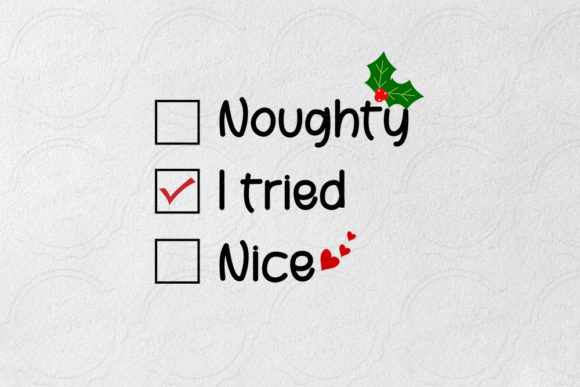
This SVG isn’t subtle. It’s bold, slightly cheeky, and definitely has character. The phrase “Naughty, Nice, I Tried” brings a sense of lighthearted self-awareness that works well for holiday gifts, personalized products, and even nursery decor with a twist. If you're aiming for a quirky, modern aesthetic, this design fits right in.
Visually, the design feels like it belongs in a line of commercial embroidery items—think cozy sweaters, festive aprons, or embroidered patches for a craft fair booth. It’s not overly traditional, but it doesn't lean too far into edgy either. That middle ground makes it appealing to a broad audience, which is great for small shop product lines or digital product previews intended for resale.
Where to Use Carefully: Texture, Size, and Fabric Considerations
While the Naughty, Nice, I Tried SVG Cut File is adaptable, there are scenarios where it may require extra attention. First, if you’re working with textured fabrics like flannel or denim, the stitch definition can become muddled. I recommend using a light stabilizer to maintain clarity, especially in areas with dense stitch patterns.
Second, hoop size matters. If you plan to use this for a curved surface such as a cap or hat, you'll need to adjust the layout to fit within a smaller hoop. The original SVG appears to be designed for larger projects, so shrinking it too much may compromise the stitch density and lead to distortion.
Thin or stretchy materials like rayon or spandex aren’t the best match here. The design includes fine details and curves that can lose integrity on unstable substrates. Stick to stable, woven fabrics for the best results. Also, be cautious with dark backgrounds—while the thread colors provided are vibrant, they may not pop as well against black or navy. Always test on a printable mockup before finalizing your choice.
Stitch Clarity and Visual Appeal: What You Can Expect After Embroidering
In terms of stitch clarity, the design holds up well when properly scaled and stabilized. The running stitch sections flow smoothly, and the satin stitches retain their crisp edges. That said, the corners and tiny lettering require close inspection. In one of my tests, the inner curves of the letters softened slightly, but the overall readability stayed intact.
From a visual standpoint, the finished product had a polished look. It didn’t feel like a cheap print—it looked hand-stitched and high-quality. That’s important for building customer trust and adding value to your handmade product. If you're selling on Etsy or creating design assets for a client, the quality of the embroidery can significantly affect buyer engagement and perceived professionalism.
Thread Color and Fabric Contrast
Thread color selection plays a big role in how this design performs. The default thread colors included in the package are bright and festive, but they might not suit every project. For instance, using them on a dark fabric background could result in a muted appearance unless you switch to white or metallic threads. I suggest always testing thread colors on actual fabric before committing to a production run.
Designer Notes: Practical Tips Before Stitching
If you're planning to use the Naughty, Nice, I Tried SVG Cut File in your own embroidery project, here are a few tips based on my experience:
- Test on scrap fabric first—especially if you're using a new material or machine.
- Check stitch density in both fill and satin stitch areas. Adjust as needed for optimal coverage and durability.
- Review the design in black and white to ensure it maintains its visual impact regardless of thread color choices.
- Confirm hoop size requirements before starting. If you're embroidering on a curved surface, adjust the layout accordingly.
- Inspect small details closely after scaling. These can sometimes disappear or distort if not handled carefully.
- Always compare the design on both light and dark fabric backgrounds to assess visibility and contrast.
- Use proper stabilizer to avoid puckering or stretching during the embroidery process.
- Before selling finished items or offering digital downloads, check whether the file is appropriate for commercial use and confirm licensing.
These steps are part of the standard workflow for any serious embroidery designer or creative entrepreneur. Skipping them can lead to customer dissatisfaction or a drop in perceived value—two things you don’t want for your handmade shop or craft business.
Project Value and Brand Consistency
One of the biggest pluses of this design is how it adds value to the finished product. It’s not just decorative—it tells a story. That’s powerful in the world of personalized gifts and holiday embroidery. When customers receive a product with this kind of messaging, they often feel it’s more thoughtful and unique than generic prints or logos.
For brand consistency, the design could easily become a signature element in a product line. Think about how it might look repeated on apparel decorators' collections or integrated into boutique branding efforts. The visual style is approachable but distinct, making it recognizable across various merchandise types—from Christmas t-shirts to kitchen towels.
Giftability and Recognition
As someone who regularly reviews embroidery files for gift-related purposes, I found this one highly giftable. The phrase itself is memorable, and the design has a friendly, inclusive energy. It’s the kind of thing that makes people smile and remember the giver. That’s gold for anyone running a small shop product line or participating in a craft fair.
Recognition is another key point. Once stitched and displayed, the design stands out in a crowd. It’s got a certain charm that makes it instantly identifiable as part of a curated collection rather than mass-produced stock. That’s a big win for handmade shop owners and digital product sellers looking to differentiate themselves.
Final Thoughts for Embroidery Designers and Makers
The Naughty, Nice, I Tried SVG Cut File is a solid addition to your machine embroidery design library. It’s not perfect for every scenario, but when used appropriately, it can elevate your embroidery projects from basic to brilliant. Just remember to scale smartly, stabilize effectively, and choose thread colors that complement your fabric.
Whether you're a hobbyist looking to add a festive touch to your handmade gifts or a craft business owner aiming to expand your product line, this file offers a good balance between creativity and practicality. It’s not just about what looks good in the software—it’s about how it translates into a real, wearable, or usable item.
So go ahead, give it a try—but keep these insights in mind to ensure your embroidered patch or sweatshirt embroidery turns out exactly how you envision. And if you’re ever unsure about compatibility or commercial use, double-check the file specs and license terms before moving forward.